
Choosing the Right Machine for Land Clearing and Mulching: A Guide
Land clearing and mulching are essential tasks for maintaining and developing properties, whether for agricultural, construction, or conservation purposes. With various machines available, selecting the right one for the job can be daunting, especially for those new to land clearing. In this blog post, we'll explore the differences between skid steers, excavators, tractors, and tracked and wheeled carriers for mulching and land clearing applications, helping you make an informed decision for your specific needs.
Understanding the Machines
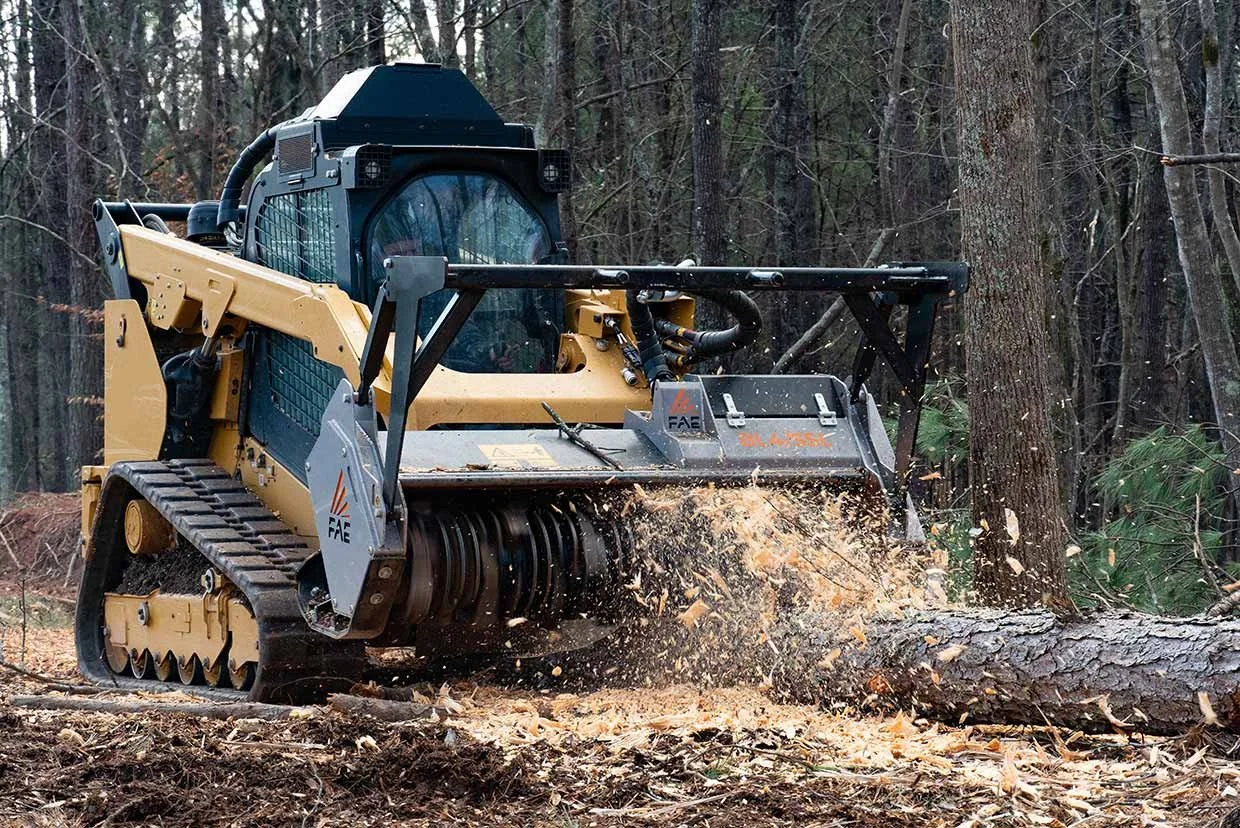
Skid Steers
Compact and Versatile: Skid steers are ideal for navigating tight spaces and maneuvering around obstacles.
Attachments: Skid steers can be equipped with various attachments, including mulchers, grapples, and buckets, making them versatile for different tasks.
Weight and Size: Skid steers are generally smaller and lighter than excavators and tractors, making them suitable for smaller projects and tighter spaces.
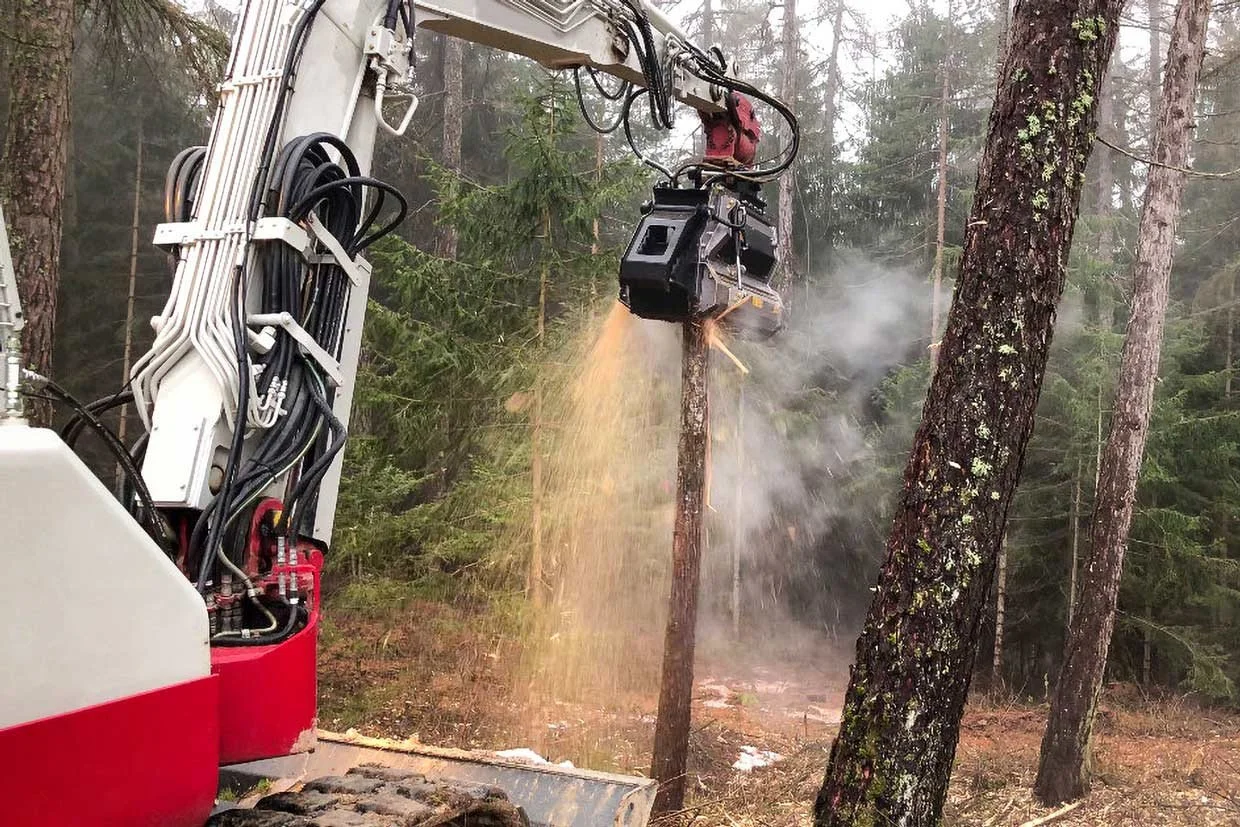
Excavators
Power and Reach: Excavators offer significant power and reach, making them ideal for larger projects and more demanding tasks.
Precision: Excavators provide precise control, allowing operators to target specific areas and work with accuracy.
Attachments: Excavators can be equipped with various attachments, including mulchers, thumbs, and buckets, expanding their capabilities.

Tractors
Power and Traction: Tractors offer substantial power and traction, making them suitable for larger areas and more demanding tasks.
Attachments: Tractors can be equipped with various attachments, including front-end loaders and mulchers, increasing their versatility. Tractors also have tillers/subsoilers that go deeper than those typically found on a skid steer.
Operator Comfort: Tractors often provide a more comfortable operating experience, with features like suspension seats and larger cabs.
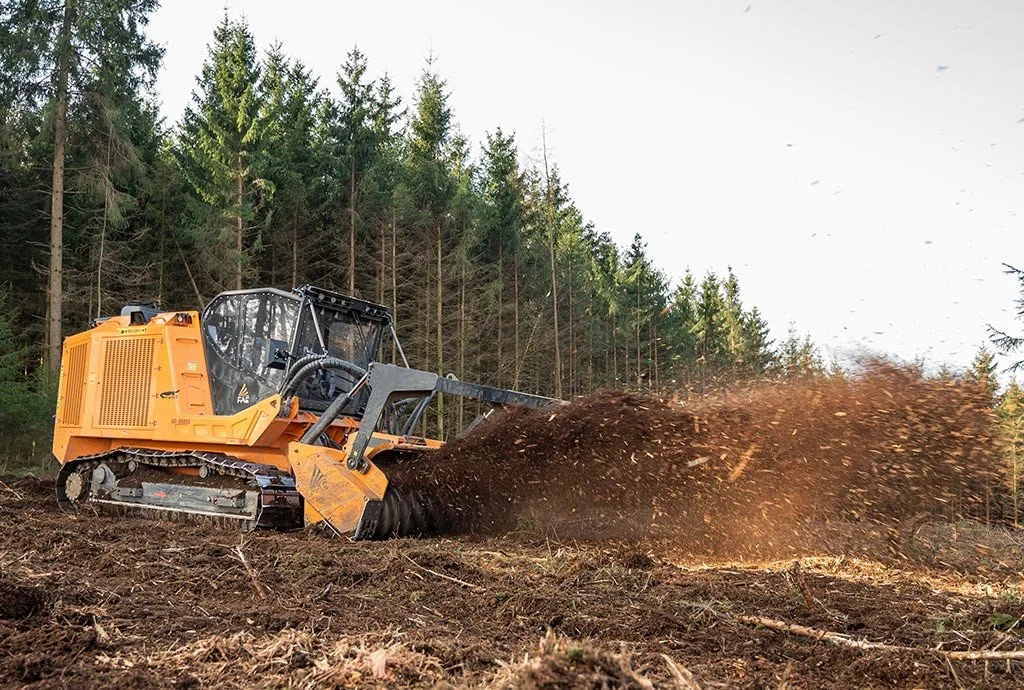
Tracked Carriers
Stability and Traction: Tracked carriers offer excellent stability and traction, making them ideal for challenging terrain, such as steep slopes and wet or uneven ground.
Low Ground Pressure: Tracked carriers distribute their weight over a larger area, reducing ground pressure and minimizing the risk of damage to sensitive terrain.
Attachments: Tracked carriers can be equipped with various attachments, including mulchers and forestry equipment, expanding their capabilities.
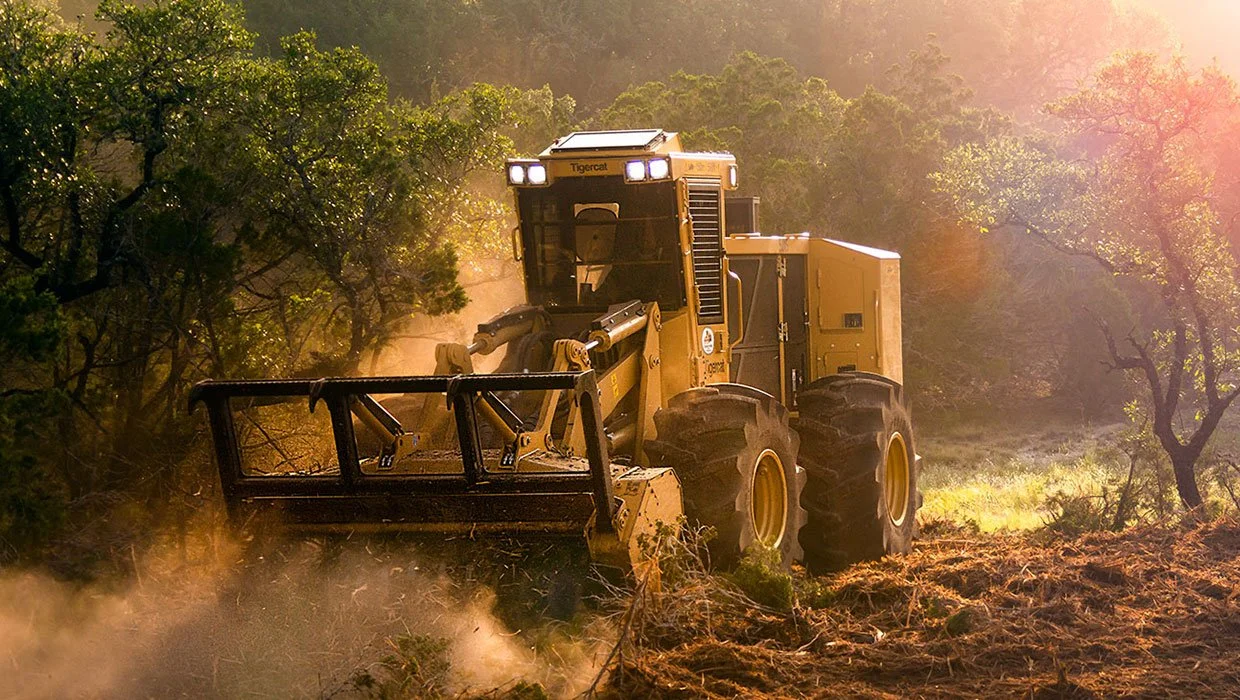
Wheeled Carriers
Mobility and Speed: Wheeled carriers offer greater mobility and speed, making them suitable for larger areas and applications where speed is essential.
Attachments: Wheeled carriers can be equipped with various attachments, including mulchers and forestry equipment, increasing their versatility.
Operator Comfort: Wheeled carriers often provide a comfortable operating experience, with features like air conditioning and suspension seats.
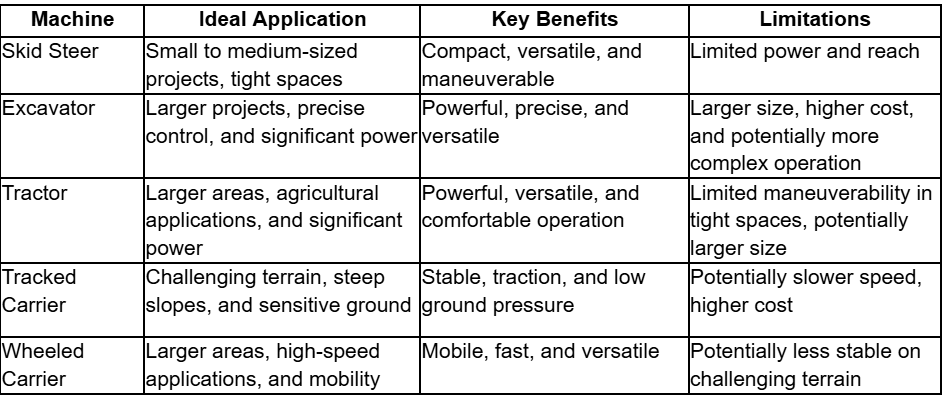
Comparing Machines for Land Clearing and Mulching
Factors to Consider When Choosing a Machine
Project Size and Complexity: Consider the scale and intricacy of your land clearing and mulching projects.
Terrain and Obstacles: Assess the terrain, including slopes, rocks, and other obstacles that may impact machine performance.
Attachments and Versatility: Think about the types of attachments you may need and the machine's ability to accommodate them.
Operator Experience and Comfort: Consider the operator's level of experience and comfort with different machines.
Choosing the right machine for land clearing and mulching depends on various factors, including project size, terrain, and attachments. By understanding the strengths and limitations of skid steers, excavators, and tractors, you can make an informed decision that meets your specific needs. Whether you're a seasoned professional or just starting out, this guide will help you navigate the process and select the best machine for your land clearing and mulching applications.